F-100 bed wood: measure before the kit
F-100 bed wood and strip kits are sold by year and bed length. Your bed may not match its year. Measure the bolt holes, cross-sills, and length before you order.
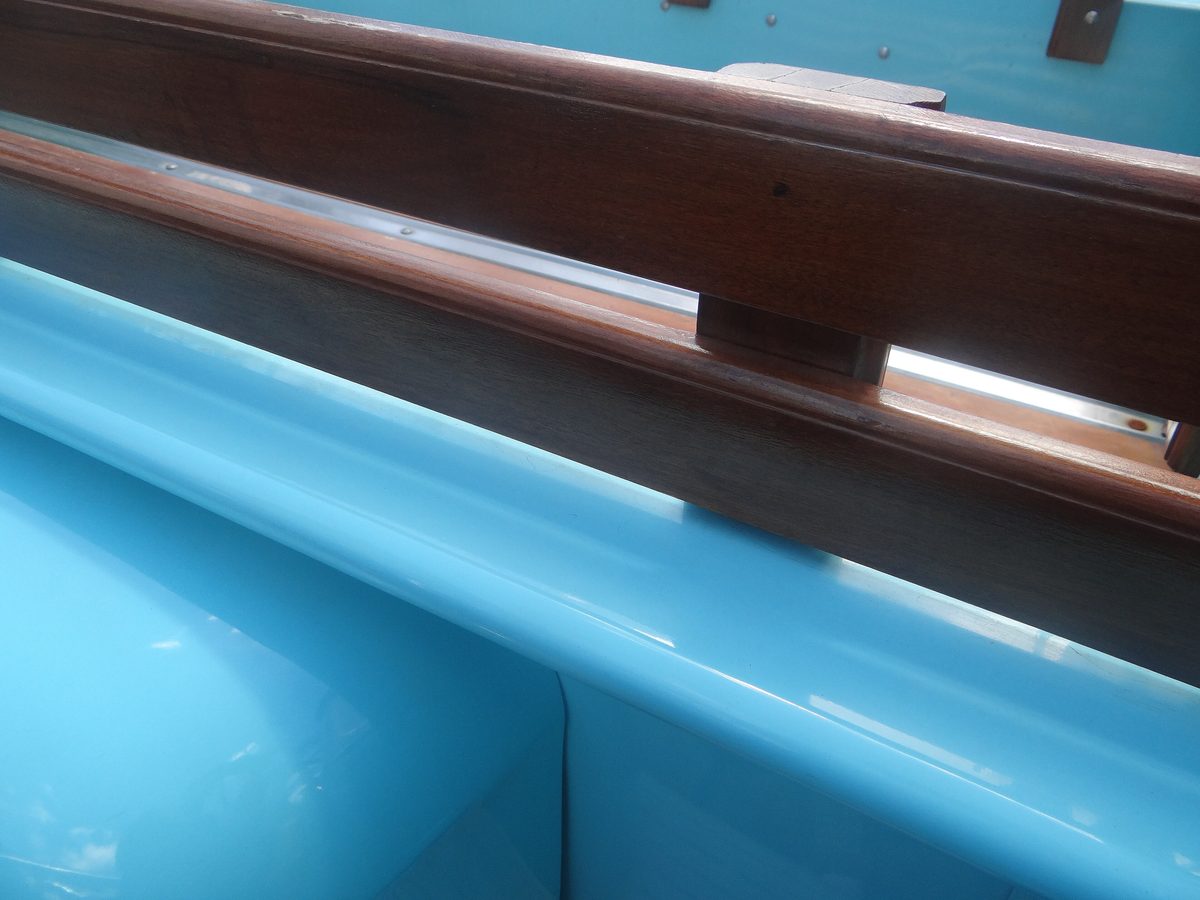
F-100 bed wood is sold by year range and bed length. Your bed might match the year on the title. It might also be a bed off a different truck, or a bed where somebody welded in new cross-sills and drilled the holes wherever they landed.
The catalog doesn’t know any of that. It only knows the year you typed in.
So measure first. A tape measure and an afternoon cost less than a return.
Which beds even take wood
The Flareside is the wood-floor bed. Wood kits are sold for 1953-56 F-100 and F-250 Flareside beds (LMC Truck, 1948-56 Flareside bed wood kits) and for the 1957-72 Flareside beds that came after (LMC Truck, 1957-72 Flareside bed wood kits).
Styleside beds came with steel floors, starting in 1957. Hemmings’ 1957-60 F-100 buyer’s guide describes the new Styleside box as “available with a steel floor and slab sides,” while “the traditional Flareside, with its bolted-on fenders and wood floor, was still on tap.” A wood kit for a Styleside is a different product, an overlay that sits on the steel, and not what this post is about. If you’re not sure which box is on your truck, sort that out first.
The catalog already tells you year isn’t enough
Look at how LMC breaks down the 1957-72 parts.
The oak board kit is one listing for every long bed from 1957 to 1972, and one for every short bed. The bed strips are not. Long bed strip kits are split into 1957-60, 1961-63, 1964-66, and 1967-72. Short bed strips are split 1957-60, 1961-64, and 1965-72.
And 1964-66 long beds get two different strip kits. LMC calls them “A” and “B.” The only difference they list is where the fourth hole sits: 39 inches from the front bed panel on “A,” 40-1/8 inches on “B.” Same years, same bed length, two parts. You only find out which one you have by putting a tape on your own bed.
Other sellers break their kits down differently, so read the listing you’re actually buying from.
Drilled or not changes the risk
Check whether the boards come drilled. LMC says its wood kits, both the 1953-56 and 1957-72 ones, are unfinished and not pre-drilled, while the strip kits come pre-cut with pre-punched square holes. Other sellers may sell boards pre-drilled, so ask before you order.
- Undrilled boards: you drill to your bed, so odd hole spacing is less of a problem with the wood. The strips are still punched to a pattern, and that pattern has to match your sills.
- Pre-drilled boards: the bed-to-frame holes are where the kit maker decided they go. If your bed disagrees, the wood is wrong.
Either way, punched strips and drilled boards assume a factory bed. Make sure yours is one.
Look for old repairs first
Before measuring, check what’s been done to the bed:
- Welded or replaced cross-sills. Look for fresh welds, mismatched primer, or holes that don’t line up with the originals.
- Filled or wallowed-out holes. Somebody already fought a fit problem here.
- Mixed hole sizes. Random sizes mean somebody improvised.
- Odd fasteners. Lag bolts, machine screws, or mismatched carriage bolts mean the hardware isn’t what the kit expects.
If you see any of that, treat the bed as non-factory and measure everything.
What to measure
Bed length
Measure the floor from the front bed panel to the inside of the tailgate. That’s the number that matters, not the wheelbase or a spec sheet. Check it against what the kit says it’s for.
Cross-sills
Count them. Then measure from the front bed panel to each one and write every number down. Boards and strips need to land on support. If your sills moved during a repair, the kit’s pattern won’t.
Hole spacing, both sides
Measure center to center between holes on each sill, and front panel to each hole along the length of the bed. That front-panel number is exactly how LMC tells its 1964-66 “A” and “B” kits apart, so get it right.
Do both sides. If one side got repaired and the other didn’t, they may not match.
Hole count
Count the holes. Your bed decides the count, not the catalog. Extra holes in the kit leave empty holes in your floor. Missing ones mean you’re drilling.
Buy the kit made for your truck
Once you know what you have, buy the kit built for that truck: right years, right bed length, right strip pattern for your holes. Compare your numbers to the seller’s specs, and if they can’t tell you what their kit is drilled or punched for, buy from someone who can.
Making your own bed wood is a job for an experienced carpenter. Milling long boards flat and straight, getting the edges right, and drilling every hole in the right spot is real woodworking, not a weekend side project. If that isn’t you, the kit is the answer.
What skipping the tape costs
The kit shows up and the holes don’t line up. Your choices:
- Send it back. Check the return window, restock fee, and who pays shipping before you order. Long boards are not cheap to ship back. Here’s how to budget a return.
- Drill new holes in the wood. Now it’s a custom part. Check the seller’s return policy, because drilled parts usually can’t go back.
- Drill new holes in the bed. Now your bed is modified, and the next kit won’t match either.
- Force it. Wallow the holes out and live with gaps. It won’t sit flat.
An hour with a tape beats all four.
Checklist
- Confirm which bed you have, Flareside or Styleside, and look for old repairs.
- Measure the floor length, front panel to the inside of the tailgate.
- Count the cross-sills and measure front panel to each one.
- Count the holes on each side.
- Measure front panel to each hole, and center to center between holes. Both sides.
- Photograph everything with a tape measure in the shot.
- Check whether the kit is drilled, and compare your numbers to the seller’s specs before you order.
The Classic Truck Fitment guide covers more year traps, and the Truck Bay series has the rest of the truck measurement posts.
Write your bed measurements on the printable intake before you order wood.