NOS that sat wrong: storage damage checks
NOS storage damage: UV fade, moisture rust, heat warpage, packaging breakdown, and clip fatigue. New old stock is only new if it sat right.
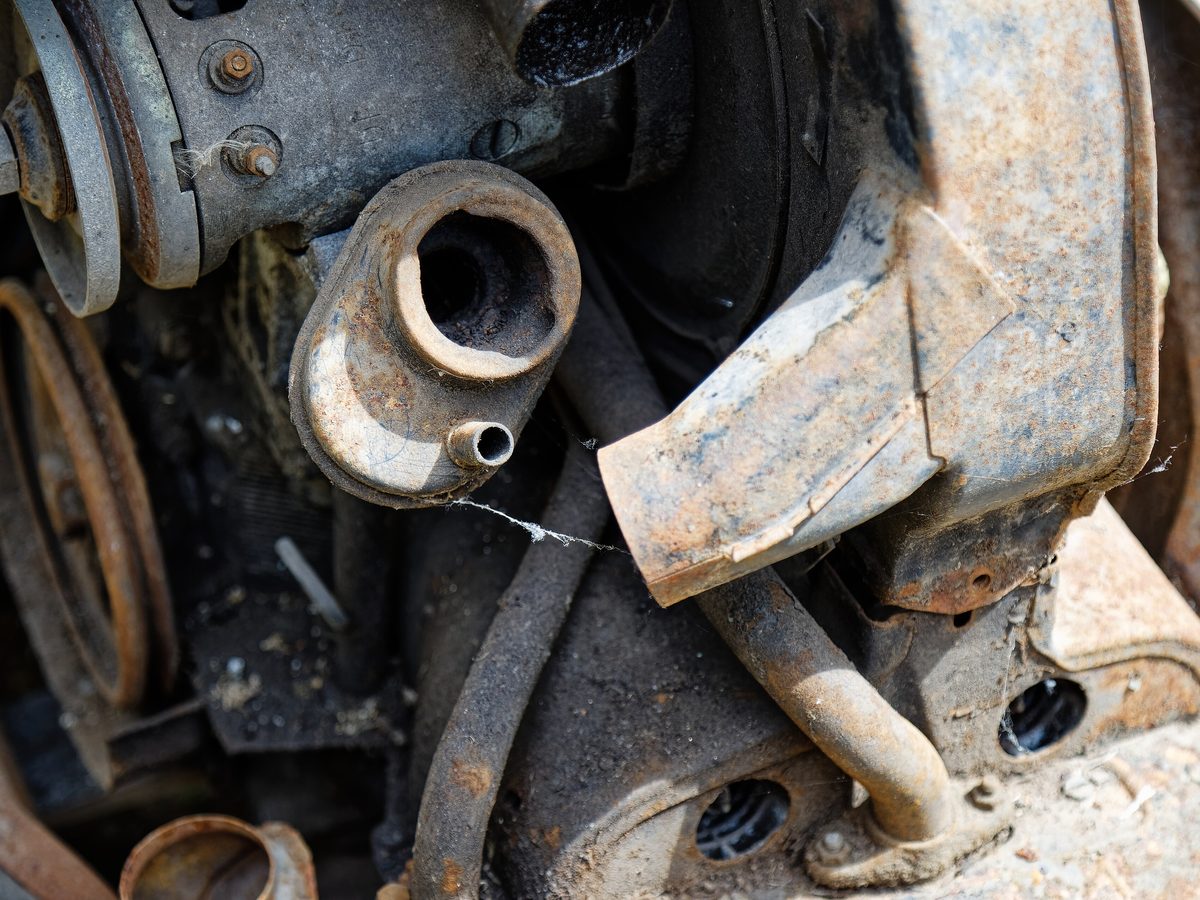
NOS means new old stock. It does not mean ready, safe, or fit. Parts that sat for decades carry decades of storage conditions: sun, moisture, heat, vibration, and the cardboard or plastic that was supposed to protect them but didn’t.
Buying NOS without inspecting for storage damage is buying a part based on its birthday, not its condition.
What “sat wrong” means
Storage damage is not use damage. It’s aging under bad conditions. A part can leave the factory perfect and arrive at your bench ruined because it spent thirty years in a barn, a non-climate shed, or a warehouse with a roof leak nobody fixed.
I check for five failure modes before I treat NOS as ready to install. I check before I commit to keeping it, ideally within the return window.
The five storage damage modes
1. UV and light fade
Plastic, rubber, and any dyed or painted surface. UV breaks down polymers and fades color even through packaging if the packaging is clear or torn.
What I look for:
- Color shift between protected and exposed areas (under tape, behind labels).
- Brittle texture on rubber or plastic that should still be flexible.
- Cracking along stress points: bends, edges, mounting tabs.
If the packaging has a window or the part sat unboxed, I treat UV damage as likely until inspection says otherwise.
2. Moisture and rust
Metal NOS in humid or wet storage. Rust shows up as surface scale, pitting, or staining. It also hides under packaging: inside folds, behind tape, in threaded holes.
What I look for:
- Surface rust on fasteners, brackets, or exposed metal edges.
- Staining or corrosion on plated parts (chrome, zinc, cadmium).
- Moisture marks on packaging (water stains, mildew, cardboard breakdown).
Rust on a “new” part means the vendor stored it wet or sold it after water exposure. Either way, it’s not new anymore.
3. Heat warpage and material creep
Plastic, rubber, adhesives, and gaskets. Heat accelerates aging and causes warpage, especially when parts are stacked or stored under compression.
What I look for:
- Warped flat surfaces: gaskets, trim panels, lens edges.
- Adhesive that’s dried, oozed, or transferred to packaging.
- Plastic that’s gone brittle or lost dimensional stability.
A gasket that sat in a hot attic for twenty years is not the same gasket that left the factory. It’s a flat object that used to be a gasket.
4. Packaging breakdown and contamination
Cardboard, blister packs, plastic bags, and foam inserts. Packaging degrades. When it does, it sheds dust, fibers, oils, or acids onto the part.
What I look for:
- Cardboard dust or fiber stuck to adhesive or plating.
- Blister packs that have cracked, yellowed, or delaminated.
- Foam that’s disintegrated and left residue on the part surface.
- Oil or grease stains from packaging materials or adjacent stored items.
If the packaging is compromised, the part has been exposed. Exposed NOS is no longer protected stock.
5. Mechanical fatigue and clip damage
Clips, tabs, springs, and any part with tension or articulation. Even sitting still, materials fatigue under load. Clips lose spring tension. Tabs become brittle. Springs sag.
What I look for:
- Clips that don’t snap or hold tension.
- Bent or cracked mounting tabs.
- Springs that don’t return or have visible set (permanent deformation).
I test clips gently before installation. If they fail at hand pressure, they’ll fail at install torque.
The inspection timing rule
I inspect NOS within the return window, before installation, and before any process that makes the part non-returnable: paint, modification, adhesive, or permanent fitment.
Best case: inspect on receipt, while the part is still in original packaging and the return clock hasn’t expired.
Worst case: inspect after you’ve already paid, after the return window closed, and after you planned the install around it. Now the storage damage is your problem.
What the vendor should disclose (but often doesn’t)
Honest NOS vendors photograph:
- The packaging condition (tears, stains, age).
- Any visible surface rust, fade, or material degradation.
- The backside and mounting features, not just the shiny face.
Vendors who only show the hero angle are hoping you’ll assume the rest is fine. It usually isn’t.
The return conversation
When NOS arrives with storage damage:
- Photograph it. Packaging as received, part out of package, damage detail with scale or comparison.
- Reference the listing. What the seller claimed vs. what arrived.
- State the return reason. “Storage damage: surface rust on mounting tabs, UV fade on gasket material, packaging compromised.”
- Ask about the restock fee. If the damage is seller-undisclosed, push back on the fee. You’re not returning a good part. You’re returning a part that wasn’t as described.
Most return fights over NOS are about whether storage damage counts as “new.” It doesn’t. New means ready to install in the condition it left the factory. Aged means it sat wrong.
When NOS is still worth it
NOS works when:
- The vendor discloses condition and photos match.
- Storage was climate-controlled and packaging is intact.
- Inspection confirms the part still meets installation requirements (fit, finish, function).
- The return window is long enough to verify all of the above.
I’ll pay NOS pricing for that. I won’t pay it for “found in a warehouse” with one photo and a year range.
Bottom line
NOS that sat wrong is just old. Inspect for UV fade, moisture rust, heat warpage, packaging breakdown, and clip fatigue before you treat it as ready.
Storage conditions matter more than storage duration. A thirty-year part from a clean, dry, dark shelf beats a five-year part from a leaking barn.
The OEM vs NOS vs Repro guide covers the decision framework. The Fitment Desk series tracks more inspection and vendor literacy habits.
Log your NOS inspection notes and vendor condition disclosures on the printable intake before you commit to the buy.